Aquarium Log Book KDP Interiors: A Creator's Essential Tool
Keeping an aquarium is a rewarding hobby, but its success hinges on consistent care and meticulous record-keeping. For many enthusiasts, a simple notebook works, but it often lacks structure and can become messy over time. This is where professionally designed interior templates, like the Aquarium Log Book KDP Interiors, become invaluable. These are not physical books you buy off a shelf; they are digital files—specifically crafted layouts—that you, as a creator, can use to publish your own customized log book through Amazon's Kindle Direct Publishing (KDP) platform or for your personal printing.
The Common Oversight: Underestimating Design & File Quality
Many aspiring KDP publishers or hobbyists looking to create a personal log think they can quickly design a similar product using basic software. This approach often leads to several overlooked issues. The first is a lack of professional structure. A homemade spreadsheet or document might record water parameters, but it typically fails to include dedicated, logically organized sections for tracking fish additions, plant growth, equipment maintenance schedules, and veterinary visits—all crucial for a healthy tank.
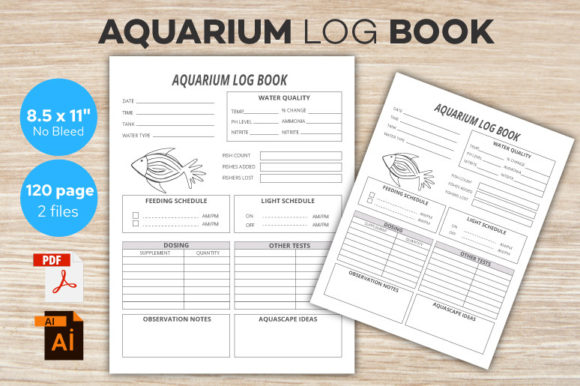
Furthermore, the technical specifications of the files are frequently misunderstood. A creator might produce a layout that looks good on their screen but, when uploaded to KDP, results in a blurry, misaligned interior because they didn't use the correct dimensions or resolution. The Aquarium Log Book KDP Interiors specifies key details: a standard US letter size of 8.5 x 11 inches, 120 pages, no bleed (which is correct for an interior-only book), and high-resolution 300 DPI files. Using files that don't meet these standards can lead to KDP rejecting your upload or, worse, customers receiving a poorly printed book they are dissatisfied with.
Why File Format Variety Matters
Another common mistake is only seeking a single PDF file. While a PDF is ready for upload, having source files like the included AI (Adobe Illustrator) and EPS formats is a significant advantage. These allow for customization. Perhaps you want to add a specific section for a brackish water aquarium, or change the font to better suit your brand. Without these editable source files, you are locked into the template exactly as provided, limiting your ability to tailor the product to a niche audience or your personal needs. It’s a practical step to check for multiple file formats before purchasing any KDP interior template.
Practical Advice for Choosing and Using the Template
Before you decide to use a template like the Aquarium Log Book KDP Interiors, take a moment to audit your actual needs. Are you publishing for Amazon KDP to sell to others, or are you printing a single copy for your own use at home? For KDP sellers, verify the template’s page count aligns with your pricing strategy and that the “no bleed” setting is correct for an interior-only book. For personal use, ensure your local printer can handle a 8.5x11” PDF at 300 DPI for crisp results.
Always preview the full interior PDF. A good template will have a logical flow. Look for sections like: Date & Time, Water Temperature, pH & Ammonia Levels, Fish Behavior Notes, Feeding Schedule, and Filter Maintenance. A well-designed log prompts you to record everything necessary, preventing gaps in your data that could obscure the cause of a future aquarium issue. A fragmented record system makes troubleshooting nearly impossible.
A Better Approach to Maximizing Value
Think beyond just the log pages. With the editable AI file, you have the opportunity to enhance the product. Consider adding a brief introductory guide on basic aquarium care parameters, or a troubleshooting chart on common fish diseases. This transforms a simple log book into a more comprehensive "Aquarium Care Journal," increasing its value for customers or its utility for yourself. The template provides the robust foundation; your knowledge adds the unique, helpful content that makes it stand out.
For KDP publishers, remember that the interior is one half of the product. You must pair it with a compelling cover design and a clear, benefit-focused book description that highlights how this structured log helps hobbyists maintain a healthier aquarium and avoid costly mistakes. The interior's quality supports that claim, but you must communicate it effectively.
Final Checks Before You Begin
To ensure a smooth process, make these final verifications. First, confirm your software compatibility. If you plan to customize, do you have access to software that can open and edit AI or EPS files? Second, for KDP, cross-check the template’s stated dimensions (8.5 x 11") against the current KDP template requirements for paperback interiors to ensure they are still perfectly aligned. Third, scan the 120-page layout. Does it have a balance of log pages (perhaps weekly spreads) and some extra pages for notes, diagrams, or reference tables? A good interior balances structured repetition with flexibility.
Using a professionally prepared Aquarium Log Book KDP Interiors solves the foundational problems of design and technical quality. It saves you countless hours of trial-and-error design work and prevents the frustration of rejected KDP uploads or poor print quality. By starting with a correct, high-quality foundation, you can focus your energy on what matters most: adding your unique expertise to create a truly helpful tool for aquarium enthusiasts or for your own dedicated hobby care.