The Anatomy of a Premium Academic Daily Planner KDP Interior
For the independent publisher or creator, crafting a digital planner for KDP involves more than just placing boxes on a page. The interior structure defines the user experience, transforming a simple notebook into a functional tool for academic success. When examining products like Daily Planner KDP Interiors - Academic, we see a blueprint for creating purpose-driven publications that cater to a specific, demanding audience. This discussion looks at the composition, utility, and production considerations of such a product from a creator's perspective.
Core Components of an Academic Planner Design
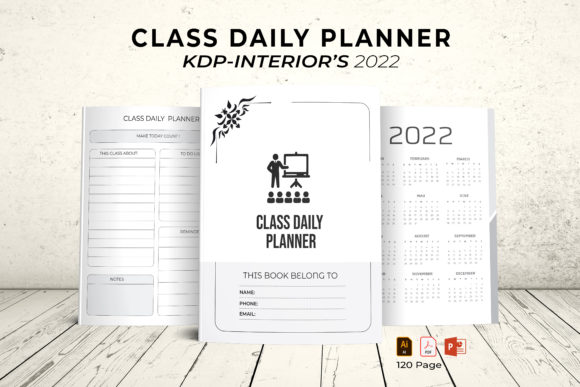
An academic planner diverges significantly from generic daily planners. Its structure must mirror the rhythms and requirements of a scholarly life, whether for a university student, a researcher, or an educator. The typical layout often includes a semester or term overview at the beginning, providing a macro view of important dates and deadlines. This is followed by monthly calendars, which allow for broader project planning and goal setting.
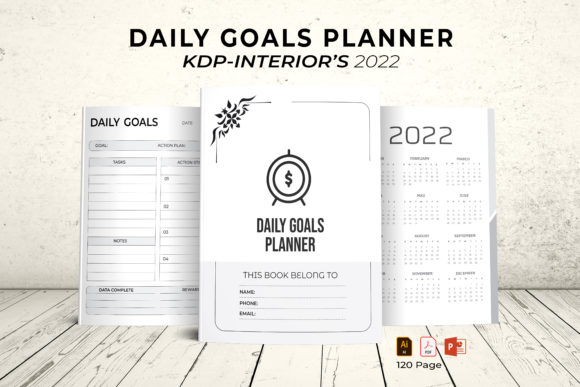
The most critical section is the weekly and daily spread. Here, the design must accommodate not just appointments, but substantial task lists, reading assignments, project milestones, and study blocks. A well-considered KDP interior for this purpose might feature columns for course codes, dedicated spaces for lecture notes or key concepts, and integrated trackers for grades or research progress. The inclusion of reference pages, such as citation guidelines, common formulas, or semester budget sheets, adds further specialized value.
File Specifications and Production Readiness
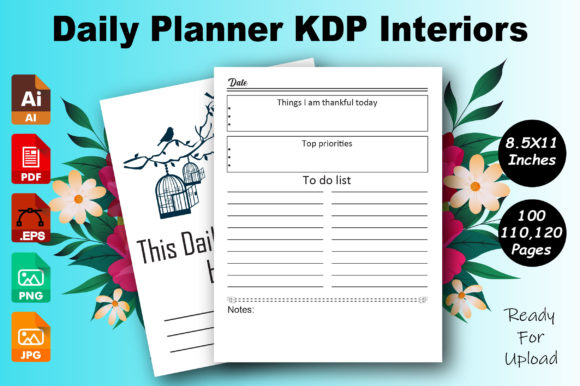
The technical specifications of a ready-to-use interior package are foundational to its usability. Dimensions set at 8.5" x 11" inches align with the standard US letter format, a common and practical size for planners. The offering of 100, 110, and 120-page options provides flexibility, allowing creators to choose a length that matches the depth of content without overwhelming the user.
A "No Bleed" specification is particularly relevant for interior pages, as bleed is typically only necessary for full-color cover designs. The inclusion of multiple file types—AI, PDF, EPS, JPG, PNG—addresses diverse creator workflows. The AI and EPS source files, likely from Adobe Illustrator, are crucial for deep customization, enabling changes to layout, fonts, and graphics. The print-ready PDF ensures a hassle-free upload to KDP, with all margins, fonts, and image resolutions correctly embedded for professional output.
Strategic Applications in Education and Beyond
The primary application is, naturally, for students across all levels of higher education. However, the utility extends to graduate researchers managing complex experiment schedules and publication deadlines, professors organizing lecture content and grading, and even corporate trainers coordinating instructional modules. The academic framework promotes a disciplined approach to time management that is transferable to many knowledge-intensive professions.
For the KDP publisher, understanding these varied use cases informs marketing and description writing. Highlighting how the planner's features can manage a thesis timeline or balance multiple course workloads speaks directly to the target audience's needs. It's not merely a calendar; it's a project management tool for intellectual endeavors.
Characteristics of High-Quality Print-Ready PDFs
The term "High-Quality Print Ready PDF" entails several technical assurances. Fonts must be fully embedded or outlined to prevent substitution and layout errors during Amazon's printing process. Image resolutions need to be sufficient for crisp printing at the specified dimensions. All margins and safe zones must be meticulously observed to ensure no text is cut off. Furthermore, the PDF should be optimized for size, ensuring fast uploads and processing, yet without compromising on quality. This backend reliability is a significant advantage for creators who want to focus on content and marketing rather than troubleshooting printing glitches.
Considerations for Customization and Branding
Access to Illustrator and InDesign source files, as mentioned in offerings like Daily Planner KDP Interiors - Academic Download, unlocks significant potential. This allows creators to move beyond a templated product to build a unique branded item. Customization can involve color scheme changes to match a specific aesthetic or institution, logo integration, adding institution-specific reference pages, or even restructuring layouts to suit a niche academic sub-field.
This adaptability is key for publishers targeting specific universities, study programs, or professional academic societies. It transforms a generic product into a tailored solution. However, it requires a degree of design software proficiency. For those without such skills, the ready-made PDF offers a straightforward, no-skill-needed path to market.
Workflow Integration for KDP Creators
Implementing such an interior into a KDP publishing workflow is streamlined when the package is comprehensive. The creator receives a bundle: the editable source for customization, the final PDF for upload, and often preview images for use in the KDP listing. The process involves selecting the desired page count variant, making any final tweaks in the source file (if capable), generating a final PDF proof, and then uploading it alongside a cover design to the KDP platform.
A critical observation in this workflow is the importance of testing. Even with a print-ready PDF, ordering a physical proof copy from KDP before publishing is an invaluable step. It verifies paper quality, binding alignment, and the final feel of the planner in hand—factors that greatly influence customer satisfaction.
Balancing Structure with User Flexibility
A well-designed academic planner interior provides structure without being restrictive. It should guide the user towards effective academic planning habits while leaving ample room for personal annotation and adaptation. For example, labeled sections for "Today's Key Concepts" prompt active learning review, but the space should be large enough for detailed writing. This balance is a hallmark of thoughtful design, aiming to educate the user on best practices through the layout itself.
The long-form nature of a 120-page planner, for instance, supports an entire academic year, encouraging long-term goal tracking and continuity. This contrasts with shorter, more generic planners that may foster a more fragmented, short-term approach to task management.
In the landscape of KDP publishing, products like these represent a move towards specialized, tool-like publications. They serve a clear function and solve identifiable problems for a dedicated audience. For the creator, they offer a foundation upon which to build a reputable brand in the educational niche, providing tangible value that goes far beyond blank pages. The ultimate success lies in how effectively the printed interior, born from those digital source files, becomes an indispensable part of a user's academic journey and achievement.