The Complete Guide to Your Homebrewing Journal and Planner
For the passionate homebrewer, the journey from grain to glass is a story worth documenting. Each batch is a unique experiment, a blend of science, art, and a dash of luck. While the taste of a perfect pint is a fleeting reward, the knowledge gained from the process is the true treasure. This is where a dedicated homebrewing journal becomes an indispensable tool. Moving beyond simple notes on a scrap of paper, a professionally designed KDP interior template, like the Homebrewing Journal Planner 2022, offers a structured, beautiful, and permanent way to capture your brewing legacy, turning your hobby into a refined craft.
Beyond Basic Notes: The Purpose of a Homebrewing Journal
At its core, a homebrewing journal is a logbook. But its purpose extends far beyond merely recording what you did. It serves as your personal brewing database, a source of consistent improvement, and a creative outlet.
First, it provides continuity and consistency. Brewing is a process with many variables: malt bills, hop schedules, yeast health, water chemistry, and fermentation temperatures. Without accurate records, replicating a successful batch or diagnosing a flawed one becomes guesswork. A detailed journal entry allows you to clone your best recipes precisely.
Second, it fosters scientific learning. Homebrewing is applied microbiology and chemistry. By tracking specific gravity readings, fermentation activity, and final tasting notes alongside your process steps, you begin to see cause-and-effect relationships. You learn how a certain dry hop timing affects aroma, or how a temperature shift during fermentation influences clarity and flavor.
Finally, it acts as a creative canvas. For many, the journal becomes a place to sketch ideas for new beer labels, jot down inspired recipe names, or note commercial beers you'd like to emulate. It transforms the brewing process from a standalone activity into an ongoing, documented project.
Why a Structured Planner Elevates Your Practice
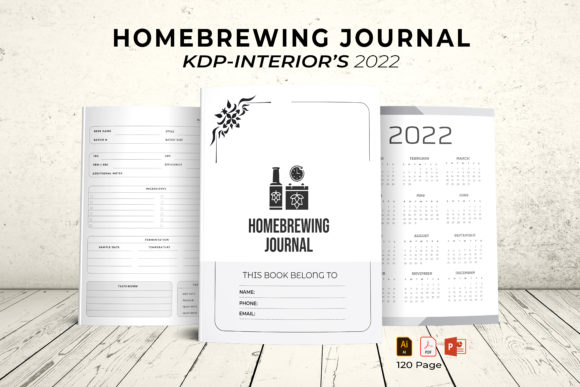
Using a generic notebook is a start, but a purpose-built planner, like the described 2022 Homebrewing Journal Planner designed for KDP (Kindle Direct Publishing), adds a layer of organization and professionalism that enhances the entire experience. This particular template, with its 120 pages including a 2022 calendar, is engineered for utility.
The inclusion of a calendar is not merely decorative. It allows you to plan your brewing schedule alongside your life. You can mark brew days, primary fermentation end dates, bottling days, and tasting events. This visual planning helps manage time, especially for styles that require long conditioning, like lagers or high-alcohol beers.
The structured pages, ready for you to populate, guide you to record the right information consistently. Instead of free-form notes that might miss critical data, a good template prompts for ingredients, volumes, temperatures, and observations. This consistency is key to building a reliable knowledge base over months and years of brewing.
Understanding the KDP Interior Template Features
The technical specifications of this Homebrewing Journal Planner highlight its versatility and quality. Designed as a KDP interior, it is formatted specifically for publishing as a physical paperback or journal via Amazon's platform, or for personal printing.
- US Letter Size (8.5 x 11 inches): The standard size for North American printing, ensuring compatibility with home printers, office printers, and professional print shops.
- Fully Editable Vector Files (AI, EPS): For advanced users with Adobe Illustrator, these files allow complete customization. You can change layouts, colors, fonts, and graphics without loss of quality because vectors are mathematically defined shapes, not pixel-based images.
- Easy-to-Edit Files (PPT, JPEG): The inclusion of a Microsoft PowerPoint file makes customization accessible to almost anyone. You can easily edit text, swap colors, and rearrange elements. JPEG images provide a quick, ready-to-use visual reference.
- Print-Ready PDF (300 DPI, No Bleed): This is the file you would upload directly to KDP or send to a printer. The 300 DPI (dots per inch) ensures high-resolution, crisp text and graphics. "No Bleed" means the design fits safely within the page margins, perfect for standard binding.
- 100 Vector Shapes & 120 Total Pages: The wealth of resizable vector icons and shapes (likely including equipment illustrations, hop cones, barley grains, or measurement symbols) lets you personalize your journal. The 120-page count offers ample space for a full year of detailed brewing records.
This multi-format approach empowers you. You can use the PDF as-is for a pristine, ready-to-print journal. Or, you can use the editable files to tailor the journal to your specific brewing workflow, perhaps adding sections for cider-making, kegging logs, or water profile calculations.
Integrating Your Journal into Modern Homebrewing Life
In today's connected world, homebrewing exists at the intersection of tradition and technology. A physical journal complements digital tools beautifully. While apps can calculate IBUs or track temperatures, a journal serves a different, more reflective purpose.
It fits into the creative workflow of a modern hobbyist. You might research a recipe online, use a digital spreadsheet for calculations, but then transcribe the final plan and your sensory observations into your journal. This act of writing can solidify your understanding and create a tactile connection to your craft.
For community and sharing, a well-maintained journal becomes a conversation piece at club meetings. It's easier to share a physical book with a fellow brewer to discuss a recipe than to scroll through a phone app. It also serves as an invaluable reference when teaching someone new to the hobby, showing them the importance of process and record-keeping.
In a business context, for those considering turning their hobby into a nano-business, such a journal is foundational. It provides the documented recipe development and process consistency that is crucial for scaling up and ensuring product quality.
Clarifying Common Misunderstandings
Several assumptions about brewing journals can limit their usefulness. Addressing these helps maximize the value of a tool like the Homebrewing Journal Planner.
Misunderstanding 1: Journals are only for experts. In reality, beginners benefit most. Starting with detailed records from your first batch prevents the formation of bad habits and accelerates learning. The structured prompts in a good planner guide a novice through what to observe and record.
Misunderstanding 2: You only need to write down the recipe. The recipe is just the blueprint. The journal should capture the execution and the results. Notes on mash pH, boil vigor, yeast starter vitality, and ambient fermentation temperature are often more diagnostic than the ingredients list itself.
Misunderstanding 3: A journal is just for failures. While it's critical for troubleshooting off-flavors, it's equally important for celebrating successes. Documenting what made a particular batch exceptional ensures you can recreate that magic. It also builds a positive history of your progress.
Building a Broader Understanding: The Journal as a Keystone Habit
Implementing a systematic homebrewing journal can act as a "keystone habit"—a single practice that indirectly fosters other good habits and disciplines. By committing to fill out your planner after each brewing session, you naturally become more meticulous during the brew day itself. You start checking temperatures more rigorously because you know you'll need to record them. You measure volumes more accurately because the data will go into your log. The journal encourages mindfulness and precision throughout the entire process.
Furthermore, it connects your brewing to the broader cycles of time and seasonality, thanks to integrated features like the 2022 calendar. You might notice you brew more stouts in winter and more saisons in summer, or that your fermentation temperatures are harder to control in August. This macro-view can inspire seasonal recipe planning and practical adjustments to your brewing environment.
Practical Examples of Journal Use
To see its utility, imagine two scenarios using the Homebrewing Journal Planner.
Example 1: Perfecting a House Pale Ale. On page one, you use the calendar to schedule Brew Day #1 for March 5th. In the structured log pages, you detail the recipe: malt weights, hop varieties and addition times, your chosen yeast. During the brew, you note your actual mash temperature (152°F, not the planned 154°F) and your boil-off volume. Weeks later, you taste the beer and write: "Good bitterness, but hop aroma is muted." On your next scheduled brew day for this recipe (April 10th, marked on the calendar), you review your notes. You decide to increase the late-hop addition and change your dry-hop method. This iteration is logged, and the resulting beer has superb aroma. The journal enabled targeted, data-driven improvement.
Example 2: Diagnosing a Fermentation Issue. You brew a Belgian Dubbel. Your journal records a healthy fermentation start at 68°F. However, you note on Day 3 that the temperature in your fermentation closet rose to 74°F due to a warm spell. The finished beer has a slight acidic tang. Later, reading your notes, you connect the off-flavor to the unexpected temperature spike—a common issue with certain yeast strains. Without the journal, you might have blamed the malt or your sanitation.
In conclusion, a homebrewing journal is more than a notebook; it is the cornerstone of deliberate practice in the craft of brewing. The Homebrewing Journal Planner 2022 KDP Interior transforms this concept into a accessible, professional, and customizable tool. By providing structure through a calendar and formatted pages, and flexibility through fully editable vector files, it accommodates both the beginner seeking guidance and the veteran brewer refining their art. It turns ephemeral brewing experiences into permanent, actionable knowledge, ensuring that every batch, whether a triumph or a lesson, contributes meaningfully to your journey as a brewer. Embracing this tool is a commitment not just to recording what you make, but to understanding why it turns out the way it does, ultimately leading to better beer and a deeper, more satisfying engagement with your hobby.