The Creative Power of Isometric Paper: From Sketch to Real-World Object
Imagine a sheet of paper that isn't just a blank slate, but a structured guide into the world of three dimensions. That's the core promise of isometric paper. Printed with a precise grid of equilateral triangles—each side measuring .28 inches—this specialized paper transforms abstract ideas into tangible, spatial designs. It’s a tool that bridges the gap between imagination and geometry, and its applications are as varied as the minds that use it.
What Is Isometric Paper and How Does It Work?
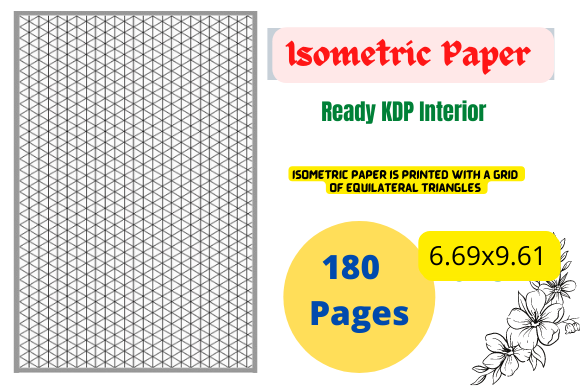
The magic of isometric paper lies in its grid. Unlike traditional graph paper with squares, this grid consists of interconnected equilateral triangles. This specific angular arrangement (typically at 30-degree increments) provides a consistent framework for drawing objects in a 3D perspective without the complexity of vanishing points used in classical perspective drawing. The .28-inch triangle size offers a balance of detail and spaciousness, allowing for both intricate components and larger assemblies.
When you draw on this paper, lines following the grid naturally represent edges that recede into space at a uniform angle. This creates an instant, coherent three-dimensional effect. It's a system that simplifies volumetric thinking, making it invaluable for anyone needing to visualize depth, proportion, and spatial relationships in a clear, scalable way.
The Multifaceted Uses of Isometric Grids
The utility of this paper spans from professional disciplines to personal passion projects.
- Architecture, Landscaping, and Sculpture: For conceptual design, isometric paper allows quick sketching of structures, garden layouts, or sculptural forms. It helps visualize massing, footprint, and the relationship between different elements before moving to digital modeling or physical maquettes.
- Artistic Exploration and Complex Imagery: Many artists, inspired by the works of masters like M.C. Escher, use this paper to craft puzzles, labyrinthine scenes, and impossible architectures. The grid provides the underlying logic for constructing those mesmerizing staircases, interlocking boxes, and geometries that defy conventional space.
- 3D Printing and Model Planning: This is where isometric paper has seen a surge in modern popularity. With 3D printers now common in schools, colleges, makerspaces, and homes, planning a print requires careful spatial forethought. Sketching the object on isometric paper helps designers check dimensions, identify potential structural issues, and visualize the final product layer by layer, reducing failed prints and material waste.
- Educational Geometry: In classrooms, it serves as a hands-on tool for teaching volumetric geometry, helping students understand concepts like nets of 3D shapes, surface area, and spatial reasoning in a concrete, drawable format.
Isometric Paper KDP Interiors: A Ready-Made Solution for Creators
For those looking to publish or utilize this tool, the concept of Isometric Paper KDP Interiors becomes highly relevant. KDP (Kindle Direct Publishing) isn't just for ebooks; it's a major platform for publishing physical notebooks, journals, and activity books. A "KDP Interior" refers to the fully formatted, ready-to-print file that constitutes the inside pages of a paperback.
The specifications for such an interior—like dimensions of 6.69x9.61 inches, a bleed-ready PDF, and completely new, non-duplicate content—are crucial for a professional result. This means a creator or publisher can obtain a perfectly formatted isometric paper notebook interior, ensuring every page has that precise .28-inch triangular grid, correctly aligned and trimmed for printing. It eliminates the technical hassle of designing the grid layout and margins, allowing focus to remain on producing a high-quality product for end-users.
Why the Right Format Matters for Users
Choosing a professionally prepared Isometric Paper KDP Interior offers practical benefits.
- Consistency: Every page is identical, which is vital for projects that span multiple pages or require precise scale continuity.
- Print-Ready Assurance: With bleed settings handled, the final printed book will have clean, edge-to-edge grids without unwanted white borders.
- Time Efficiency: For educators, makers, or small businesses, using a ready-made interior means launching a product or tool quickly, without investing in complex graphic design.
This ready-for-upload approach democratizes access to specialized tools, making isometric paper notebooks easily available to students, hobbyists, and professionals through common retail channels.
Integrating Isometric Paper into Modern Workflows
In today’s hybrid analog-digital environments, isometric paper often acts as a crucial first step. A designer might sketch initial concepts for a 3D-printed prototype on paper, capturing the organic flow of ideas. This sketch then becomes the reference for creating a precise digital model in CAD software. The paper stage allows for unfiltered creativity and rapid iteration without software constraints.
For project planning, especially in collaborative settings, a shared isometric sketch in a notebook can be a powerful communication tool. It provides a common visual language that is often clearer than verbal descriptions or rough, non-technical drawings.
Considerations Before Choosing Your Isometric Tool
If you're considering using or publishing isometric paper, here are some factors to weigh:
- Grid Scale: The .28-inch triangle is a popular standard, but ensure it suits your purpose. Smaller triangles allow more detail; larger ones are better for bigger, broader sketches.
- Paper Quality: In a physical notebook, paper weight and opacity matter. Will you be using pencil, fine ink, or even light watercolor? The right paper prevents ghosting and supports your medium.
- Binding and Format: Is it a spiral-bound notebook for flat drawing, a glued paperback for portability, or a loose-leaf pad? The format should match the use-case—studio work versus field sketching.
- Source Reliability: When opting for a Isometric Paper KDP Interior or a pre-made notebook, verify the specifications. Accurate dimensions and a properly set bleed are non-negotiable for a professional outcome.
The Enduring Value of a Structured Creative Space
At its heart, isometric paper provides a structured creative space. It imposes a helpful discipline—the grid—that paradoxically unlocks greater creative freedom in three-dimensional thinking. It’s a tool that respects both the artistic impulse and the engineer’s need for precision. From the student learning geometry, to the artist crafting an Escher-like illusion, to the maker planning their next 3D print, this paper serves as a foundational platform.
The availability of professionally formatted Isometric Paper KDP Interiors further amplifies this value, turning a niche drawing tool into an easily accessible product. It underscores how traditional materials, when adapted to modern publishing and manufacturing pipelines, can continue to play a vital role in education, industry, and personal creativity. Whether your project exists only on paper or is destined to become a physical object from a 3D printer, starting with a clear, isometric vision is often the most important step.