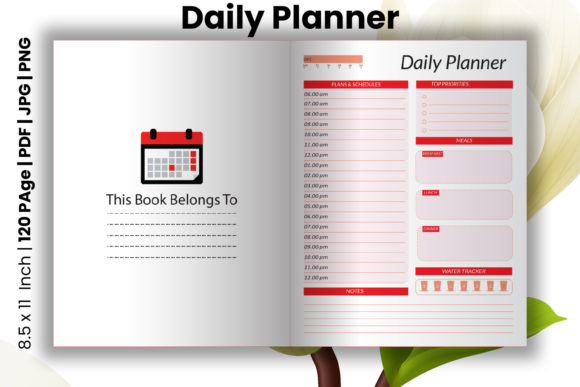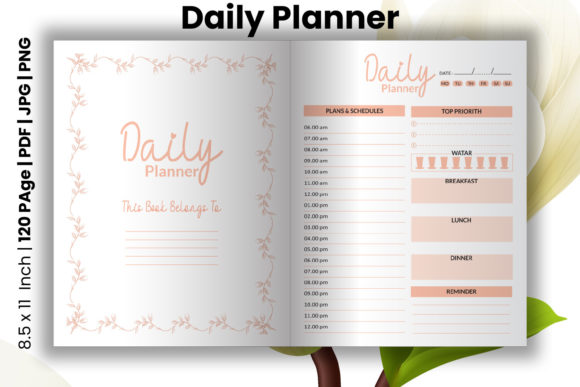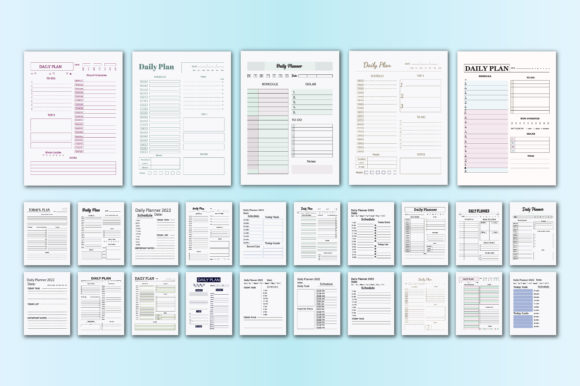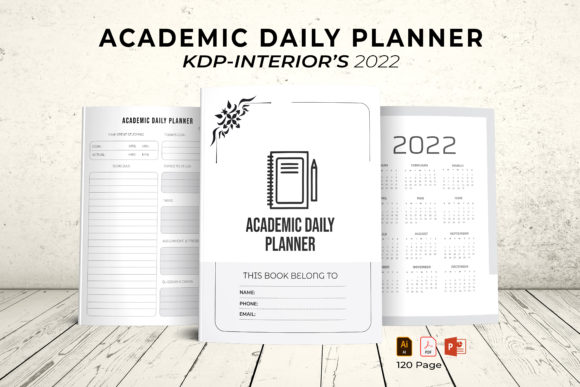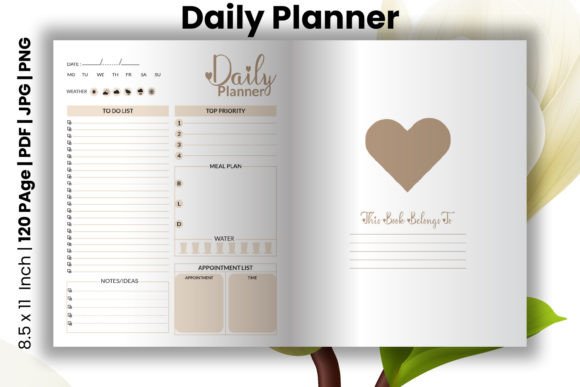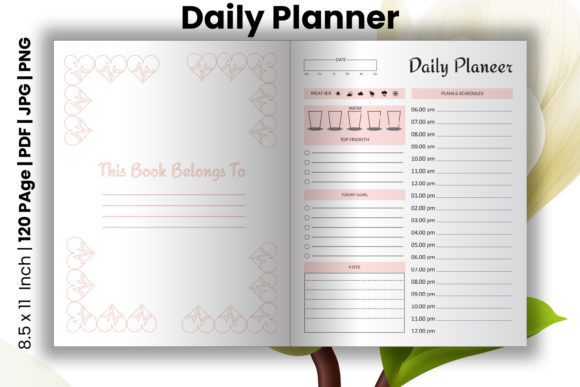
Your Essential Toolkit: Mastering the Daily Planner Schedule Pag kdp Interiors
Launching or scaling a Kindle Direct Publishing (KDP) business involves a myriad of details, from content creation to file preparation. Amidst this, the interior design of your physical products—your notebooks, journals, and planners—plays a critical yet often underestimated role. The Daily Planner Schedule Pag kdp Interiors represents a focused solution designed to streamline this specific part of your workflow. It’s a ready-to-use design package for a 120-page daily planner notebook, offering editable source files and print-ready formats. For entrepreneurs and creators looking to save time and ensure professional quality, this can be a valuable asset.
The Overlooked Foundation of a Professional KDP Product
Many new KDP sellers, excited by their book ideas, rush to market with a product that feels incomplete. A common misconception is that a great cover alone will guarantee sales. While crucial, the interior experience is what customers actually use. A poorly formatted planner—with misaligned grids, inconsistent margins, or amateurish layouts—can lead to negative reviews and low repeat purchases, even if the cover art is stunning. The interior design directly impacts usability and perceived value.
Think of it this way: you’re selling a tool for productivity and organization. If the tool is clumsy or difficult to use, it fails its primary function. Investing in a professionally structured interior template, like the Daily Planner Schedule Pag kdp Interiors, addresses this core need from the start. It shifts your focus from struggling with basic layout software to customizing and branding a proven framework.
Common Pitfalls When Choosing or Using KDP Interior Templates
Even when you decide to use a pre-made interior, there are subtle errors that can undermine your efforts. Awareness of these can help you make a better choice and use the files effectively.
Mistake 1: Ignoring File Format Compatibility and Flexibility
A template advertised as “editable” can sometimes be a source of frustration. Some sellers provide only a flat PDF, meaning you cannot change fonts, colors, or elements. The Daily Planner Schedule Pag kdp Interiors package includes an AI (Adobe Illustrator) and EPS file, which are true vector source files for deep customization. However, a mistake is to purchase such a template without having access to, or basic knowledge of, the software needed to edit it. If you only use Canva or Microsoft Word, you might struggle to open and modify these professional design files.
A better approach: Before downloading or purchasing any KDP interior, verify which specific editable formats are included and cross-reference that with the software you own or are willing to learn. The inclusion of AI and EPS files here is a strong advantage for those with Adobe Illustrator or compatible vector programs, offering immense flexibility. If you lack that software, the provided single-page PDF and PNG files still allow for use, but your customization options will be limited. Always match the tool to your skills.
Mistake 2: Not Verifying Page Count and Physical Specifications
The product details clearly state “120 pages” and “Letter size 8.5 in x 11 in, No bleed.” Yet, a frequent oversight is not considering how this fits your actual product plan. If you intend to create a 6x9” planner or a book with 200 pages, this specific template is not suitable. Furthermore, “No bleed” means the design is intended for interiors where the content stops at the margin, typical for notebooks. If you were expecting full-bleed artistic backgrounds, that’s a different product type. Misunderstanding these specs leads to purchasing a template you cannot correctly use for your project.
What to check: Always align the template’s page size, page count, and bleed setting with your KDP listing’s planned parameters. This Daily Planner Schedule Pag kdp Interiors is optimized for a standard US Letter-size notebook with a clean, no-bleed layout. Confirm this is what you want to publish. Also, consider if 120 pages is the right length for your target audience; it’s a substantial but manageable count for a daily planner.
Mistake 3: Underestimating the “Print-Ready” and Upload Process
The phrase “print-ready” is comforting, but it’s not a magic bullet. A common error is to upload the provided PDF to KDP without performing a final quality check. While the designer has prepared the files to meet general standards, you are responsible for ensuring your final customized version adheres to KDP’s strict upload requirements. Issues like fonts not being embedded, image resolution being too low, or page sizes being slightly off can still occur after you make edits.
Practical advice: Use the provided print-ready PDF as a benchmark. When you create your final file from the editable sources, generate a new PDF and meticulously review it. Use KDP’s previewer tool and, if possible, order a physical proof copy before publishing. This step catches formatting errors that could lead to printing defects and customer complaints. The template gives you a strong foundation, but a final audit is your responsibility.
Making the Daily Planner Schedule Pag kdp Interiors Work for Your Business
To leverage this template effectively, think beyond just downloading the files. Its value is in how it accelerates your production and enhances your product line.
First, consider branding. The editable AI file allows you to incorporate your own logo, choose a cohesive color palette that matches your other products, and perhaps adjust the typography to reflect your brand’s personality. This transforms a generic template into a unique part of your catalog. Second, think about extension. The 120-page structure is fixed, but you could use the design elements to create complementary products—maybe a weekly planner or a goal-setting journal—using the same visual style, establishing a recognizable series for your customers.
Finally, assess the broader offering. The note mentions more KDP books and T-Shirts in the designer’s profile. If this interior template meets your quality standards, exploring their other products could be a efficient way to build a cohesive, diverse portfolio without starting from scratch for each item. It’s a strategy of partnering with a reliable design source.
A Realistic Path to Better Results
Imagine a creator, Sarah, who wants to add a daily planner to her KDP store selling productivity tools. She previously tried designing an interior herself, resulting in uneven spacing and a time-consuming process. By choosing the Daily Planner Schedule Pag kdp Interiors, she downloads the AI file. Because she has basic Illustrator skills, she changes the header font to match her brand’s clean aesthetic, adds a small logo to the footer, and outputs a new PDF. She then uses the KDP previewer, spots no issues, and orders a proof. The printed book looks professional and consistent with her other products. She avoided the weeks of design trial-and-error and gained a product that feels polished to her customers.
The key takeaway is that such templates are not about replacing your creativity, but about removing technical barriers. They correct the common poor decision of neglecting interior design quality. By providing a structured, editable, and print-ready starting point, the Daily Planner Schedule Pag kdp Interiors helps you focus on what matters most: building your brand and serving your audience with a well-crafted product.